A quotation says laser logo, but the picture does not explain what receives the laser. It might be the cotton fabric, a separate badge or a film cut before being pressed onto the bag. Resolve that difference before judging the appearance or comparing the price.
For a cotton tote, first ask whether the proposed cloth can be assessed for direct laser marking. Confirm project-specific feasibility with Gahumi before treating the technique as a production option.
Name the surface being processed
Is a laser-cut transfer the same as direct fabric engraving? No. In the first proposal, a separate decoration material is prepared and then applied. Direct laser marking on cotton fabric instead processes the identified cloth itself. An engraved tag is another component again.
Keep those descriptions beside the drawing. Ask the provider to name the proposed process and identify any added material. A photograph of a finished logo is not enough to tell the production route.
The brand ero markets a cotton tote described as directly laser-engraved. That is an example of a real product offer, not proof that another cotton fabric will respond identically or that its supplier and equipment are available for this project.
Identify the cloth before requesting an effect
Cotton fabric finish identification belongs in the first enquiry. Provide the documented fabric reference, composition, shade and any available finish or coating information. Separate confirmed facts from gaps that need the material supplier’s response.
Give that information to a qualified processing provider. Let it decide whether the material can be assessed safely and appropriately. Do not experiment on an unidentified finished bag or copy operating settings from an example made on another textile.
Trotec’s natural-textile guidance includes cotton and distinguishes marking effects on dark and light materials. It also warns that unsuitable processing can damage fibres, with problems potentially becoming apparent after washing. Its machine settings are not a recipe for a Gahumi bag.
Review the result beside untreated material
Request a laser-marked cotton colour trial on the actual proposed cloth if the provider considers it feasible. Keep an untreated reference from the same material alongside it. A pleasing mark on another shade is a design reference, not acceptance of this fabric.
For a processed and untreated cloth comparison, record the material identity, trial reference, artwork size and the difference the buyer is assessing. Look at the intended contrast, important lettering and larger filled areas without assuming the result will match an ink colour.
Ask what the observed surface change means for the completed item. Does an ink-free design guarantee unchanged fabric strength? No. The absence of a specified print ink does not establish the condition of the processed fibres or the bag’s carrying performance.
Agree any appropriate material, handling or care evaluation with the responsible provider before acceptance. Keep appearance approval separate from those results. Do not assign a load, wash life or environmental advantage from the mark alone.
Choose whether the process belongs in this order
Review the trial at the intended location on the assembled tote. A result on a loose swatch may leave questions about a nearby pocket, lining or handle. The decoration access guide helps identify the proposed assembly stage without assuming a machine can reach every finished position.
If the cloth cannot be qualified or the appearance is unsuitable, return to an identified printing proposal or revise the design. The discharge guide describes a separate dyed-fabric process; it is not another name for laser marking.
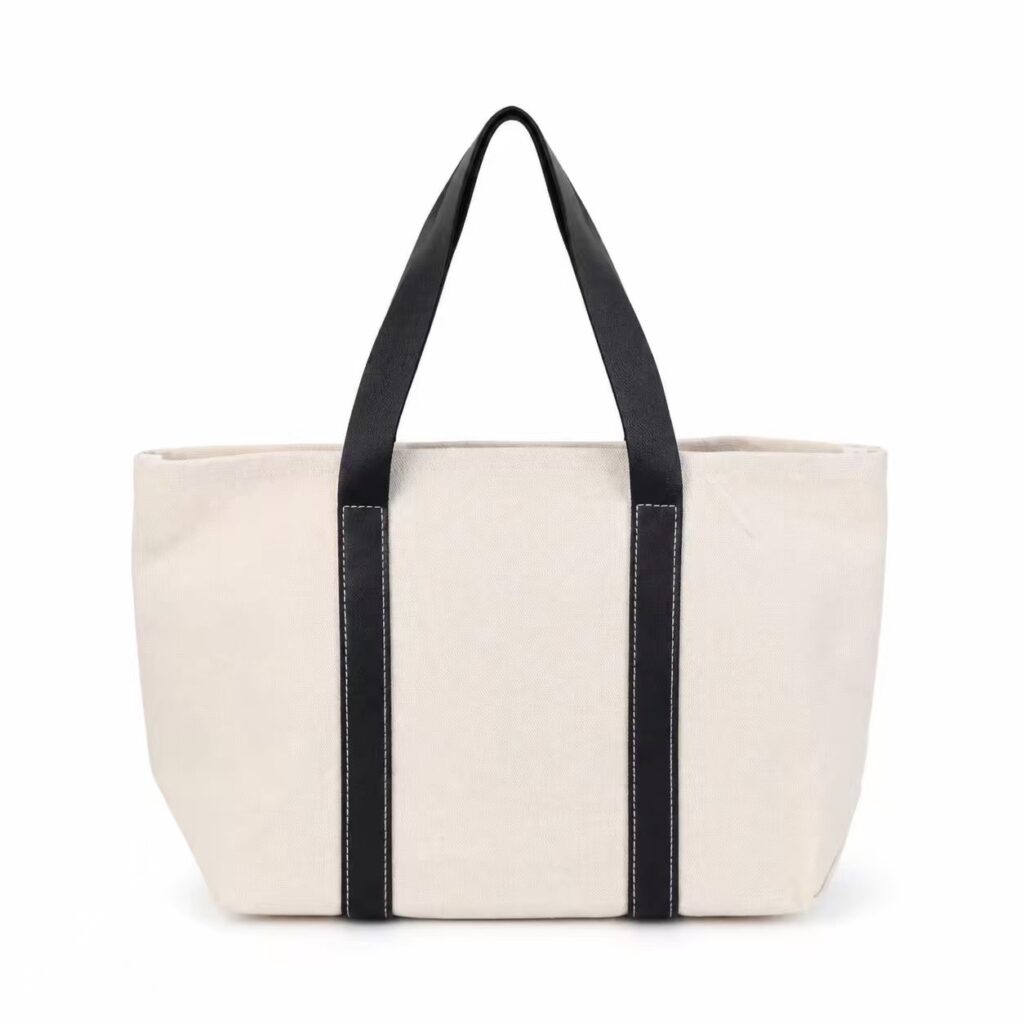
Retain the accepted cloth, process and trial references together. A material substitution needs review rather than automatic reuse of the old approval. The accompanying photograph shows a general tote exterior, not laser-marked fabric.
Send Gahumi the material information, authorised artwork, desired effect, bag construction, quantities and destination. Ask first whether a suitable provider and sample assessment can be considered. Confirm feasibility before discussing a production commitment.
Email the project references to gzgahumibag@gmail.com.