Choose the next artwork check
Start with the artwork issue that still needs a decision, then bring the accepted file and sample reference back to the size and placement brief below.
- For the master file, approve a redrawn vector version where needed and settle the font handoff and permitted output for fixed lettering.
- For photographic artwork, prepare an image, crop and colour handoff. If a transfer route is proposed, separately review transparent areas and intentional white details.
- At the intended print size, use halftone sample checks for tonal images and a full-size readability trial for fine lettering.
- Approve any reduced-colour artwork alternative as a distinct version. Agree physical references and viewing conditions before judging a colour match.
- Agree who prepares and releases the colour separations. For colours that touch, add an explicit registration and colour-join review.
Not every job needs every check. Use the ones that affect your proposed design and printing route.
A logo can look well balanced on a screen and sit too close to a handle on the finished tote. Missing fonts, unclear dimensions and an old artwork version can also send a sample back for revision. Much of that extra work starts with small gaps in the design brief.
Useful cotton tote bag artwork guidelines give the designer, buyer and printing team the same reference. For a European retail range, exhibition or promotional order, agree the design, print size and placement before approving the physical sample.
Put the approved design in one file package
Send a clearly named master file and a readable preview showing how the artwork should look. Ask the supplier which file formats suit the proposed printing process. Include the order or project name, artwork version and date so that a replacement file is easy to identify.
Check fonts and linked images before handing the files over. Ask whether fonts should be supplied or converted to outlines, and whether images need to be embedded. Keep an editable copy with your designer. For photographs or illustrations, ask the printing team to assess the image quality at the intended print size.
List any text that must remain exact, including punctuation, accents, copyright credits and website addresses. If the design uses an artist’s work or an exhibition image, confirm that you have permission to reproduce it on the bags. Send the required credit wording with the artwork.
Specify the print size separately from the bag size
A bag’s finished dimensions do not tell the printer how large the logo should be. State the artwork width and height in millimetres or centimetres, and name the units. Provide separate instructions for the front, back and any additional printed area.
Check a paper print at actual size against the proposed bag outline. Read small lettering at a normal viewing distance and look at the whole design. This gives your team a useful first review before paying for a physical sample.
Ask the supplier to confirm the usable printing area for the chosen construction. Handles, pockets, seams, gussets and the production sequence can affect the layout. A design extending towards an edge or across a seam needs specific review. The printing and branding options page can help you prepare that discussion.
Make placement measurable
“Centred on the front” leaves room for different interpretations. Mark the distance from the finished top edge to the top of the artwork, and show how the design should align across the panel. Say whether you mean the centre of the bag body or the centre of the visible space between handles.
Use an annotated drawing that shows the bag outline, artwork box and measurement points. Mark the front and back clearly. If the bag has a contrast base, check how the graphic sits above it. For a pocket or inner print, show the location on a separate view.
Agree the acceptable variation with the supplier before production. Avoid adding a precise placement tolerance simply because it appears in another brand’s specification; the supplier needs to assess it for your bag and process.
Review colour on the fabric you will order
Send your colour references with the artwork and identify which elements they apply to. Explain whether a brand colour is critical or whether your team can review an alternative. Ask how the supplier will assess it on the chosen cotton.
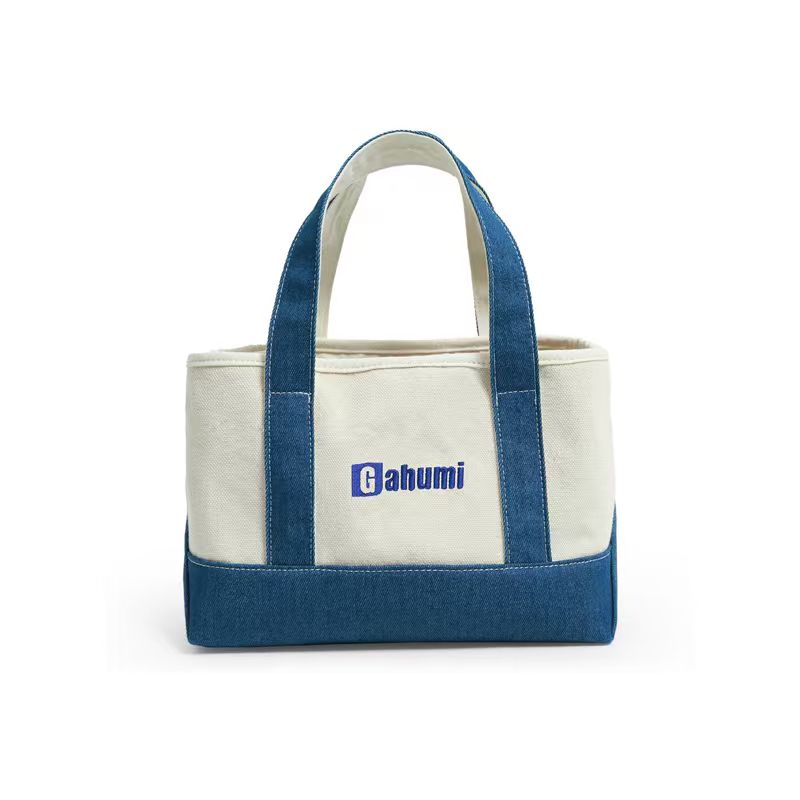
Natural, white and dyed fabrics provide different backgrounds. Review the actual fabric and the print together, including pale lettering and fine detail. Gahumi’s printed cotton tote bag guide covers the wider relationship between fabric, artwork and printing.
Keep environmental wording separate from colour approval. If the brief requires a particular ink type or supporting documentation, state that requirement and ask what is available for the proposed print. An approved shade alone does not establish the ink’s composition or certification.
Use the proof and sample for clear approval decisions
A digital proof is useful for checking the artwork version, spelling, dimensions, placement and number of printed sides. Share it with everyone who needs to approve the design, including the person responsible for any image credits. Consolidate their comments before returning revisions.
Then inspect a printed sample made with the proposed fabric and printing process. Review the logo’s scale, the smallest text, the printed colour and the feel of the panel. Open the bag, lift it by the handles and check whether folds or construction details obscure the artwork.
Agree what the sample charge covers, which revisions require another sample and how approval affects the production schedule. Our MOQ and sampling guide helps organise those questions when several designs share an order.
Keep one approval record for every design
Record the approved file name, print dimensions, placement drawing, fabric reference and sample date together. Add the quantity for each design and colour combination. Keep photographs for communication and retain the approved physical sample as the production reference.
If the design changes after approval, identify the replacement file and ask what needs to be checked again. A revised slogan can change the overall artwork width; a different bag size can change the placement. Update the written specification before confirming production.
Send Gahumi your artwork for a sample quote
Preparing printed cotton tote bags for a European shop, event or brand? Send Gahumi the artwork, bag dimensions, required print size, placement drawing and quantities per design. Include the delivery country, postcode and required arrival date so the enquiry can be reviewed as a complete project.
If the print size or position is still undecided, send the bag reference and explain how you want the design to appear. Ask us to review the available options and confirm the sample cost, revision process and quotation for your specification.
Prefer email? Send your brief to gzgahumibag@gmail.com.